


Ventilated Noise Control
Fits roads, plants, and equipment areas where airflow is required.

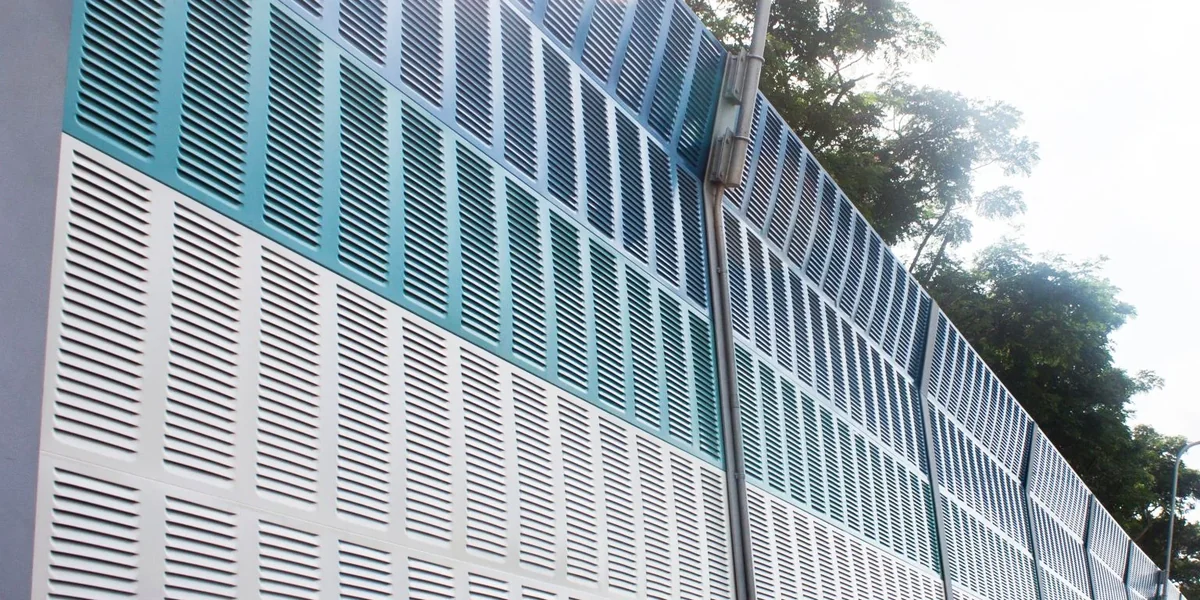
Louver sound barriers use angled panels to combine noise shielding with controlled air flow and a layered facade appearance. The louver layout is useful when ventilation, drainage, or visual rhythm must be considered with acoustic performance.
They are used along roads, railways, industrial boundaries, equipment areas, and urban sections with facade requirements. Blade angle, panel depth, absorber material, frame system, color, and supporting posts can be arranged to suit the site.
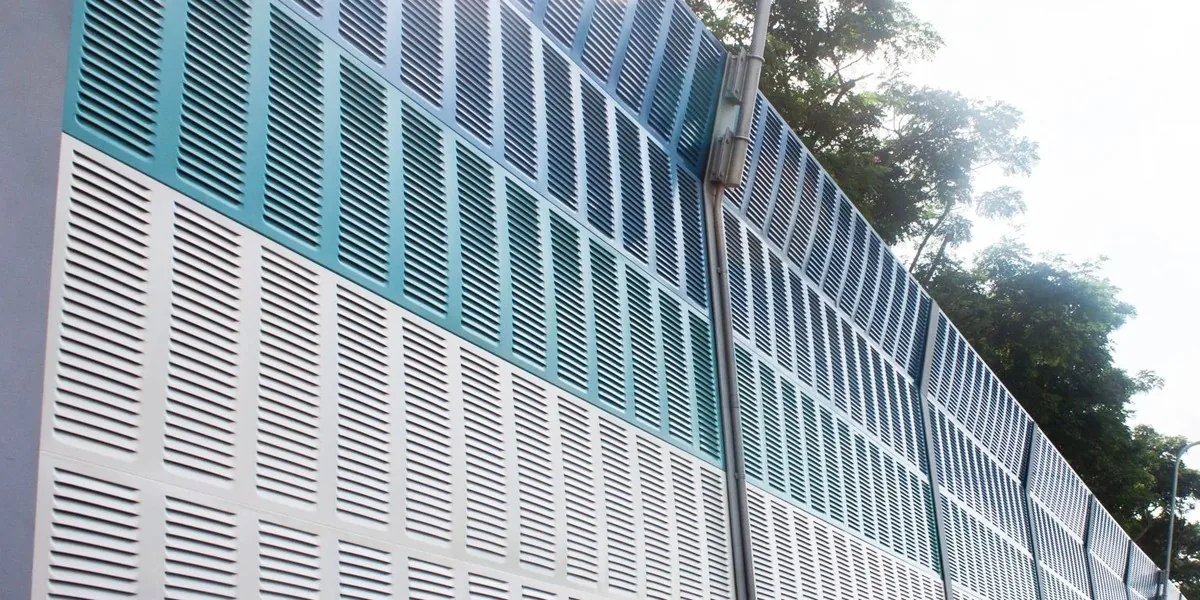
Louver Sound Barrier is built from angled louver blades, acoustic core material, frames, and posts. The louver structure changes the sound transmission path while protecting the internal material, making it suitable for projects requiring noise control, ventilation, and layered appearance.
Louver Sound Barrier changes sound propagation and reflection through angled louvers while allowing partial airflow. Sound entering the louver passages is weakened by acoustic material, and the outer blades protect the core while creating a layered appearance for noise-control and ventilation needs.
| Panel material | Galvanized steel sheet, aluminum sheet, or stainless steel sheet |
| Panel structure | Micro-hole, louver, curved, or customized structure |
| Internal material | Rock wool, glass wool, or other acoustic material |
| Surface treatment | Powder coating, fluorocarbon coating, galvanizing |
| Installation structure | H-beam posts, connectors, embedded foundation parts |
Fits roads, plants, and equipment areas where airflow is required.
Controls noise along highways, railways, and urban expressways.
Suitable for industrial parks, workshops, and equipment perimeter insulation.
Louvered appearance keeps facades neat for city roads and public spaces.